
I Just Found Out I Have Phimosis—Where Do I Start?
Discovering you have phimosis, a condition where your foreskin doesn’t retract properly, can feel overwhelming at first. But the good news is that phimosis is common and treatable, often without the need for surgery. With consistent care, the right tools, and patience, you can regain foreskin mobility and improve your comfort.
Here’s how to begin your journey toward treating phimosis naturally and effectively.
What Is Phimosis and Why Does It Happen?
Phimosis is a condition where the foreskin is too tight to retract over the glans (head of the penis). The severity can vary:
• Mild Phimosis: The foreskin retracts partially but feels tight.
• Moderate Phimosis: Retraction is difficult, even when flaccid.
• Severe Phimosis: The foreskin doesn’t retract at all and may cause discomfort during urination or intimacy.
Common causes of phimosis include:
1. Natural Development: It’s normal in childhood and usually resolves by adolescence.
2. Trauma or Scarring: Forceful retraction or repeated infections can lead to scar tissue.
3. Hygiene Issues: Poor cleaning habits can cause tightness over time.
4. Skin Conditions: Rare cases are caused by conditions like lichen sclerosus or infections.
Why Should I Treat My Phimosis?
While some men live comfortably with mild phimosis, leaving it untreated can lead to:
• Hygiene Challenges: Difficulty cleaning under the foreskin can result in smegma buildup and infections.
• Pain During Intimacy: Tight foreskin can make sex uncomfortable or even painful.
• Infections and Complications: Conditions like balanitis or paraphimosis may develop, which require immediate medical attention.
How Do I Start Treating My Phimosis?
Treating phimosis naturally is simple and effective when you follow these steps:
1. Gentle Manual Stretching
Stretching exercises are a great way to gradually loosen the phimotic band.
• How to Begin:
1. Soak in a warm bath to relax the skin.
2. Apply Vajraang Extra Virgin Coconut Oil to hydrate the foreskin and reduce friction.
3. Use your fingers to gently pull the foreskin outward in opposite directions. Never force it; stretching should be painless.
• Frequency:
Perform these stretches 5–10 minutes daily. Mild cases may see improvement in 2–4 weeks, while severe cases could take 12–16 weeks.
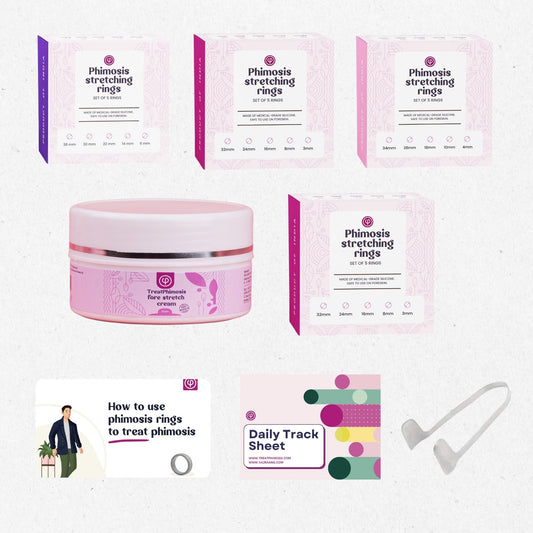
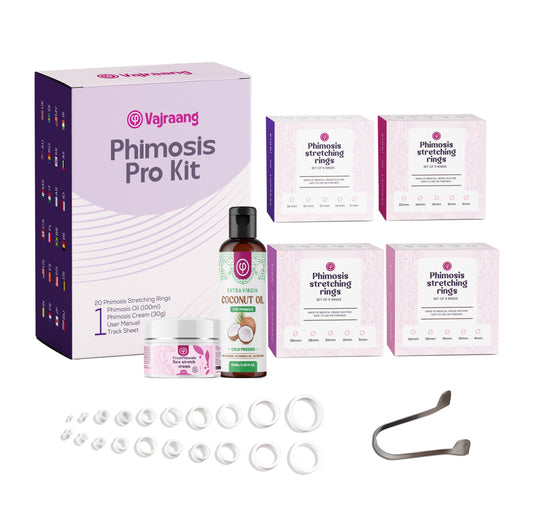
2. Use Phimosis Rings for Gradual Progress
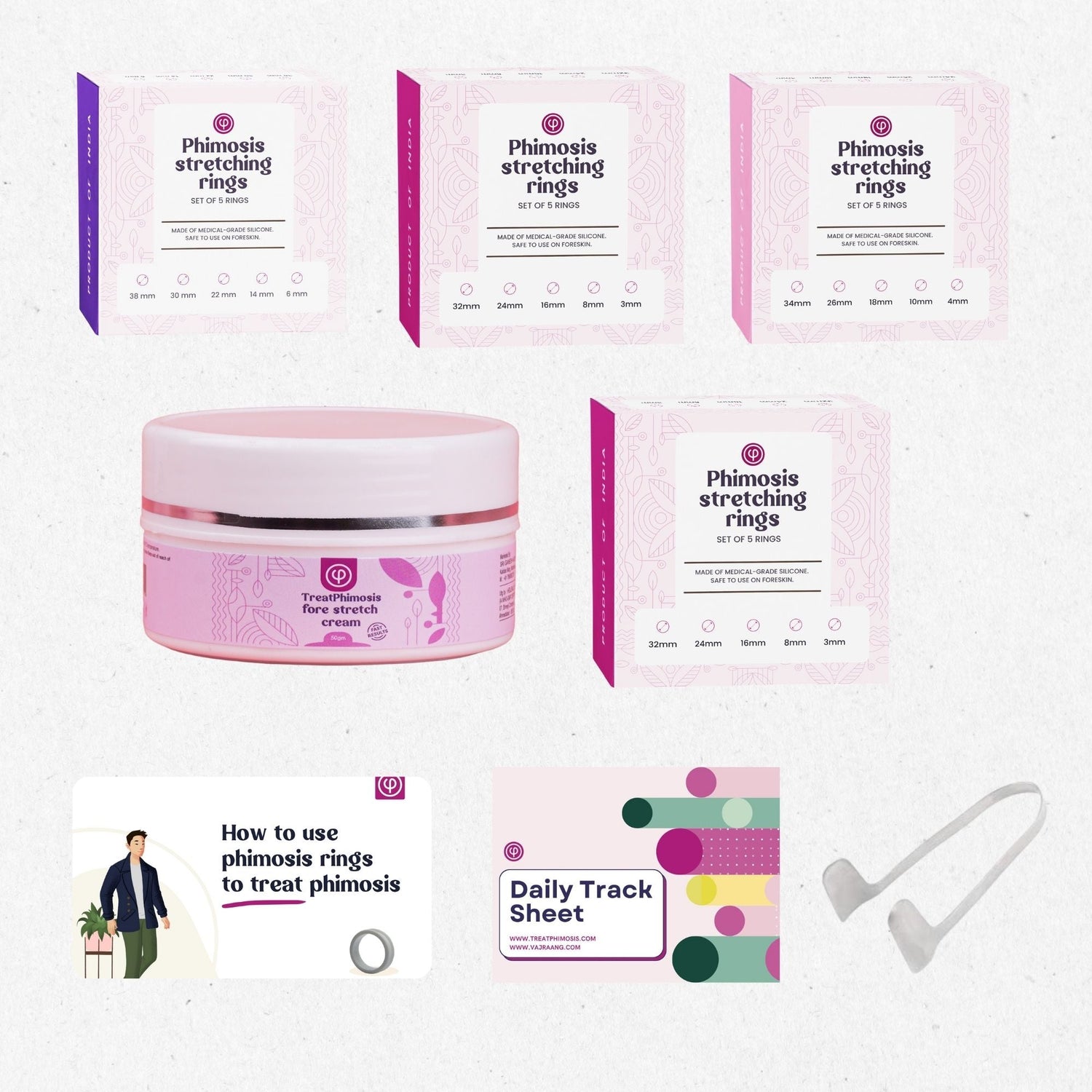
Phimosis rings are an excellent tool to complement manual stretching.
• Why They Work:
• Gradual sizing helps you progress steadily.
• Rings are easy to wear and can be used passively for 30–60 minutes daily.
• How to Use Them:
1. Select a ring that fits snugly but isn’t painful.
2. Lubricate the ring and foreskin with Vajraang Phimosis Cream before use.
3. Insert the ring under the phimotic band and wear it for the recommended duration.
💡 Tip: Start with the smallest ring that fits and move up in size as the phimotic band loosens.
3. Focus on Hygiene and Skin Health
Maintaining hygiene is critical during phimosis treatment to prevent infections.
• Best Practices:
1. Wash the foreskin daily with a mild Phimosis Intimate Wash.
2. Avoid using harsh soaps, as they may irritate the skin.
3. Apply coconut oil after cleaning to keep the foreskin hydrated and supple.
How Long Will It Take to See Results?
The timeline for treating phimosis varies depending on the severity:
• Mild Cases: Improvement in 2–4 weeks.
• Moderate Cases: Noticeable progress in 6–8 weeks.
• Severe Cases: Complete resolution in 12–16 weeks with consistent effort.
Tips to Stay on Track
1. Be Consistent: Treat phimosis daily for steady progress.
2. Avoid Overstretching: Pain or tears will delay healing. Stretch gently.
3. Monitor Progress: Celebrate milestones, like moving up a ring size or achieving partial retraction.
4. Protect During Intimacy: Use condoms and lubricants to prevent tearing and discomfort.
When Should I See a Doctor?
Consult a healthcare professional if:
• Pain persists or worsens despite consistent stretching.
• You experience frequent tearing, swelling, or signs of infection.
• No improvement occurs after 12 weeks of effort.
Moving Forward
Phimosis is a common condition that can be treated naturally with patience and persistence. By combining stretching exercises, phimosis rings, and proper hygiene, you can regain foreskin mobility and improve your quality of life.
Remember, progress takes time, but every small step brings you closer to success. Stay consistent, take care of your foreskin, and know that you’re on the path to recovery.