
I Experience Ballooning During Urination—What Should I Do?
If your foreskin puffs up like a balloon when you urinate, you’re not alone. Ballooning is a common symptom of phimosis, and while it can be uncomfortable, it is manageable with the right strategies. By addressing the root causes and incorporating effective solutions, you can achieve both short-term relief and long-term improvement.
Let’s explore why ballooning happens, whether it’s harmful, and how to manage it effectively.
Why Does Ballooning Happen?
Ballooning occurs when urine becomes trapped under the foreskin due to a tight phimotic band, causing temporary swelling before the urine exits.
Common Causes of Ballooning:
1. Tight Phimotic Ring: A restricted foreskin opening slows urine flow.
2. Incomplete Retraction: The foreskin doesn’t fully retract during urination.
3. Blockages: Residual smegma or debris under the foreskin can impede urine flow.
💡 Learn more about phimosis and its effects in “What Is Phimosis and How Can It Be Treated Naturally?”
Is Ballooning Dangerous?
In most cases, ballooning is more of an inconvenience than a serious health concern. However, unmanaged ballooning can lead to:
• Urinary Tract Infections (UTIs): Trapped urine fosters bacterial growth.
• Irritation and Soreness: Repeated swelling may inflame or irritate the foreskin.
• Worsening Phimosis: Ballooning can contribute to scarring, tightening the phimotic band further.
If additional symptoms arise, consult a professional to rule out complications.
How Can I Manage Ballooning Safely?
1. Adjust Your Position While Urinating
• Sit Down: Sitting while urinating uses gravity to assist flow, reducing pressure on the foreskin.
• Lean Forward: Tilting forward can create a smoother urine stream.
2. Gently Release Trapped Urine
• After urinating, press lightly on the ballooned area with clean fingers to expel remaining urine.
• Be gentle to avoid irritation or injury.
3. Start a Stretching Routine
Stretching is the most effective way to reduce ballooning by gradually loosening the phimotic band.
• Recommended Tools:
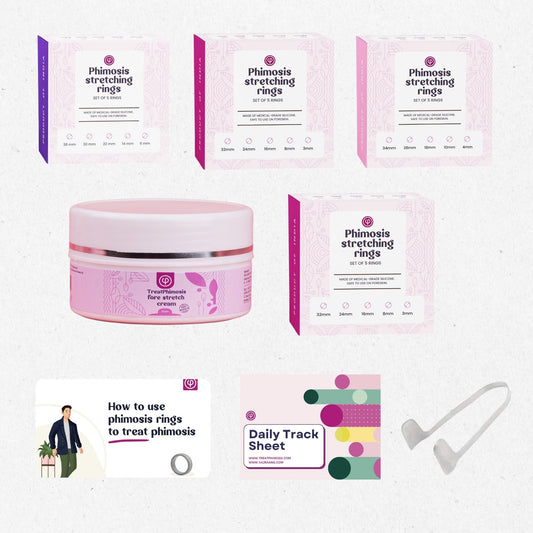
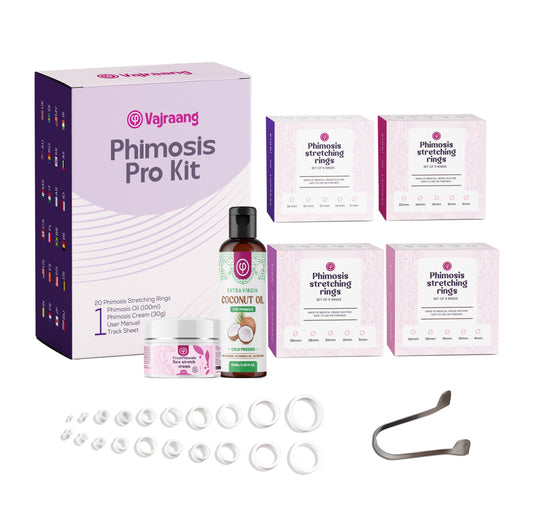
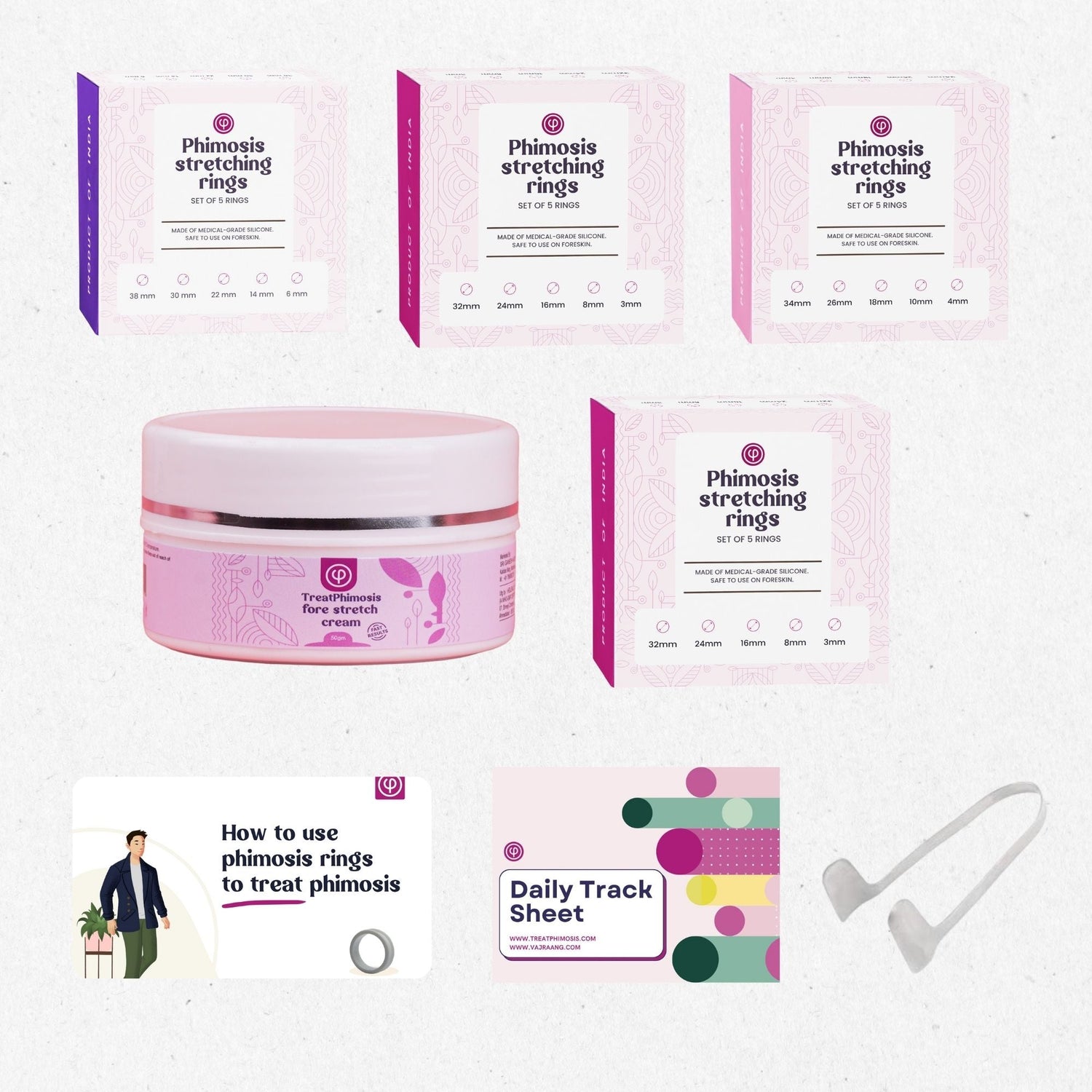
• Use Vajraang Phimosis Stretching Rings for controlled, progressive stretching.
• For severe cases, try the Vajraang GlanPro Tool, which offers precise adjustability.
• How to Begin:
1. Lubricate the foreskin with Vajraang Extra Virgin Coconut Oil to reduce friction.
2. Start with the smallest ring or narrowest GlanPro Tool setting.
3. Gradually increase tension as your foreskin becomes more flexible.
💡 For a detailed guide, visit “How to Use Vajraang Phimosis Rings at Home”.
4. Prioritize Hygiene
Maintaining proper hygiene reduces the risk of infections and blockages, improving overall comfort.
• Best Practices:
• Gently retract the foreskin as much as possible and rinse with warm water daily.
• Use a mild Phimosis Intimate Wash to clean without irritation.
5. Apply Lubricants Before Urinating
Lubricants help smooth the urine flow and reduce friction at the foreskin opening.
• Recommended Lubricants:
• Vajraang Extra Virgin Coconut Oil: Soothes and hydrates the skin.
• Water-based lubricants: Easy to apply and clean.
Apply a small amount to the foreskin before urination for a more comfortable experience.
Addressing Ballooning Long-Term
Managing ballooning requires addressing the root cause—phimosis. Here’s how:
1. Commit to Regular Stretching
Consistent stretching exercises with tools like the Vajraang GlanPro Tool can reduce ballooning by loosening the phimotic band.
2. Stay Hydrated
Drink plenty of water throughout the day. Diluted urine is less likely to irritate the foreskin, making ballooning less uncomfortable.
3. Monitor Progress
Track your foreskin’s flexibility over time. As it loosens, ballooning will reduce significantly.
When Should I See a Doctor?
While ballooning is often manageable at home, consult a healthcare provider if you experience:
• Persistent pain or discomfort during urination.
• Signs of infection, such as redness, swelling, or discharge.
• Difficulty emptying your bladder.
• No improvement despite consistent stretching and hygiene practices.
Why Consistency and Patience Matter
Stretching and addressing ballooning takes time, but with the right tools and techniques, progress is achievable. Tools like the Vajraang Phimosis Rings and Vajraang GlanPro Tool make the process straightforward, while products like Vajraang Phimosis Cream and Extra Virgin Coconut Oil support skin health and elasticity.
Final Thoughts: Relief Is Within Reach
Ballooning during urination can be frustrating, but it’s a temporary challenge. By addressing the issue with consistent stretching, proper hygiene, and supportive tools, you can reduce discomfort and achieve lasting relief.